

Counting from Two to Three
The internet’s social contracts have been a central concern for digital artists across the Web 2.0 and web3 eras, Brian Droitcour argues.
The same guy who ushered in the era of short-form viral video also made one of the most influential NFT collections of 2021. Dom Hofmann is not usually described as an artist, but he arguably is. Like some other artists, he creates conceptual systems that establish protocols for behavior. If art and technology have often shared a common task—to make a system’s rules visible and expressive—then Hofmann’s work provides a concise case study in how those rules have changed.
Launched in 2012, Vine predicted that short-form video would become the dominant mode of online expression, even as the major platforms were still focused on photos and snippets of text. The app allowed users to upload videos that were exactly six seconds long, which other users could watch on loop before scrolling to the next one. Hofmann and his co-founders imagined people casually sharing moments of their lives, but the constraint pushed users toward formal experimentation. Gestures were choreographed to land at the loop point. Sound sequences were planned with the tightness of a composer’s score. The limit was partly technical—short clips were easier to load on early mobile networks—but it became aesthetic.
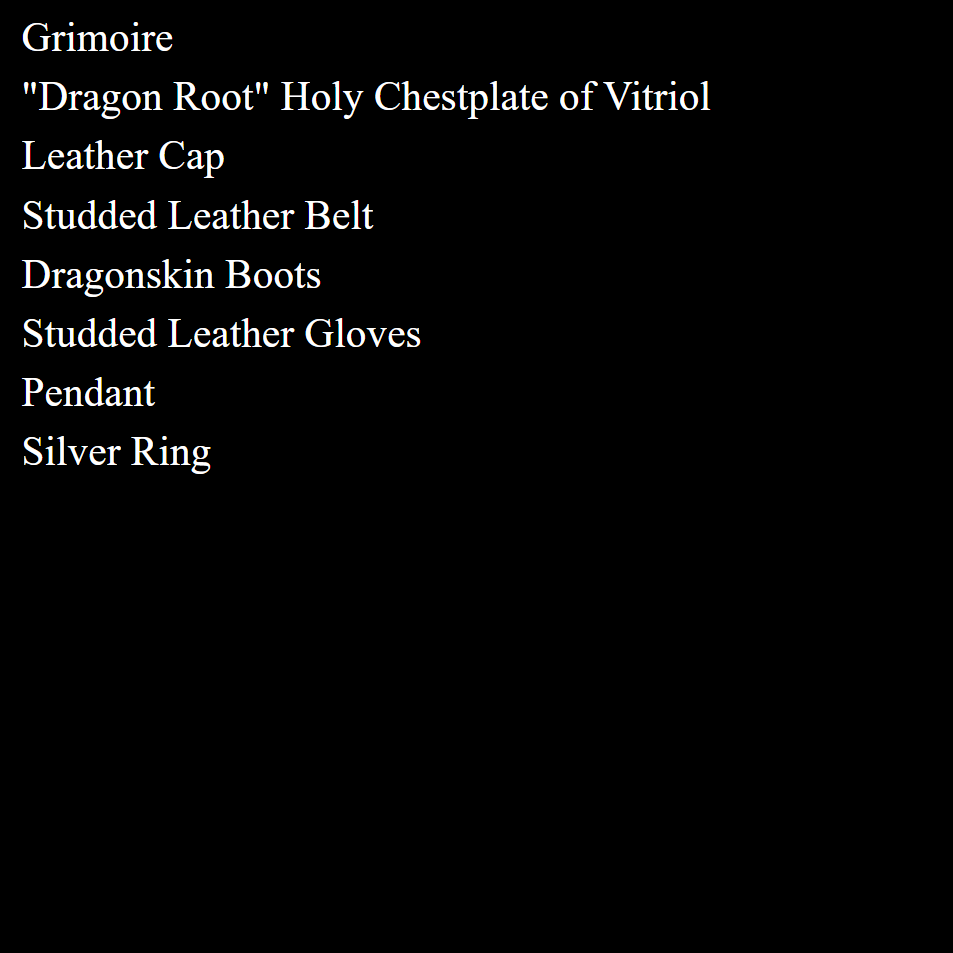
If Vine was ahead of its time, Hofmann’s NFT project Loot (for Adventurers) arrived at just the right moment. Launched in August 2021, Loot consisted of 7,777 tokens listing eight pieces of fantasy gear, harkening back to the random treasure lists in the Dungeon Master’s Guide, rendered as text and stored on-chain. At a moment when critics warned that many NFTs merely pointed to external media files that might not endure, Loot offered collectors the assurance that the collectible’s content was identical with the contract itself. The bags were free to mint, and their appeal lay in the distribution of rare items (“Demonhide Boots of the Fox”) among more common ones (“Studded Gloves”). Individual items could be swapped out of their original bags, and collectors traded them for very high sums. As gamification with no game, or worldbuilding with no narrative, Loot invited collectors to imagine a fantasy world on their own. It neatly encapsulated the attraction of the NFT market at its peak: a system of scarcity that promised belonging while staying open-ended.
Both Vine and Loot imposed formal constraints designed to stimulate the imagination of their users and audiences. They did so, however, through different kinds of protocols. Vine governed behavior through an interface limitation of six-second loops. Loot governed behavior through a smart contract that encoded rarity, ownership, and transferability from the outset. Seen together, they offer a compressed history of how the formal properties of the internet have been shifting from Web 2.0’s implicit social contracts toward web3’s explicit programmable ones.
This comparison also clarifies a history of critical digital art that institutions have often overlooked in favor of work that visualizes online experience. For example, “I Was Raised on the Internet,” a large group exhibition at the Museum of Contemporary Art Chicago in 2018, did what its title promised: it focused on artists’ use of digital media to reflect the formation of selfhood. In the 2010s, as social media became an obligatory part of daily life, it was easy to treat the earlier critical net art of artist-hackers as a relic. Curator Christiane Paul has described this shift in her discussions of “net art generations,” noting how early web artists and technologists once developed network habits side by side, whereas artists working in the Web 2.0 era often confronted platforms that were already corporate infrastructures. Much of that antagonistic work circulated outside museums, leaving institutions to emphasize art about the visible culture of social media. What tends to disappear in that framing is a parallel lineage of artists who treated social media not as a distribution channel but as a social agreement that binds users to platforms through APIs, terms of service, and the ambient threat of surveillance.
F.A.T. Lab was a collective of artists and coders who took up an interventionist ethos, producing funny, incisive projects that exposed the incursions of social media platforms into everyday life. One emblematic example is Maddy Varner’s Kardashian Krypt (2014), a browser extension that encoded and decoded messages inside images of Kim Kardashian. The project leveraged the celebrity’s omnipresence to hide private communications in plain sight, using virality as camouflage for encryption. Varner’s gesture showed how users could take advantage of popular platforms while still insisting on a personalized, encrypted experience, reversing the social contract of Web 2.0 services that demanded openness in exchange for participation.
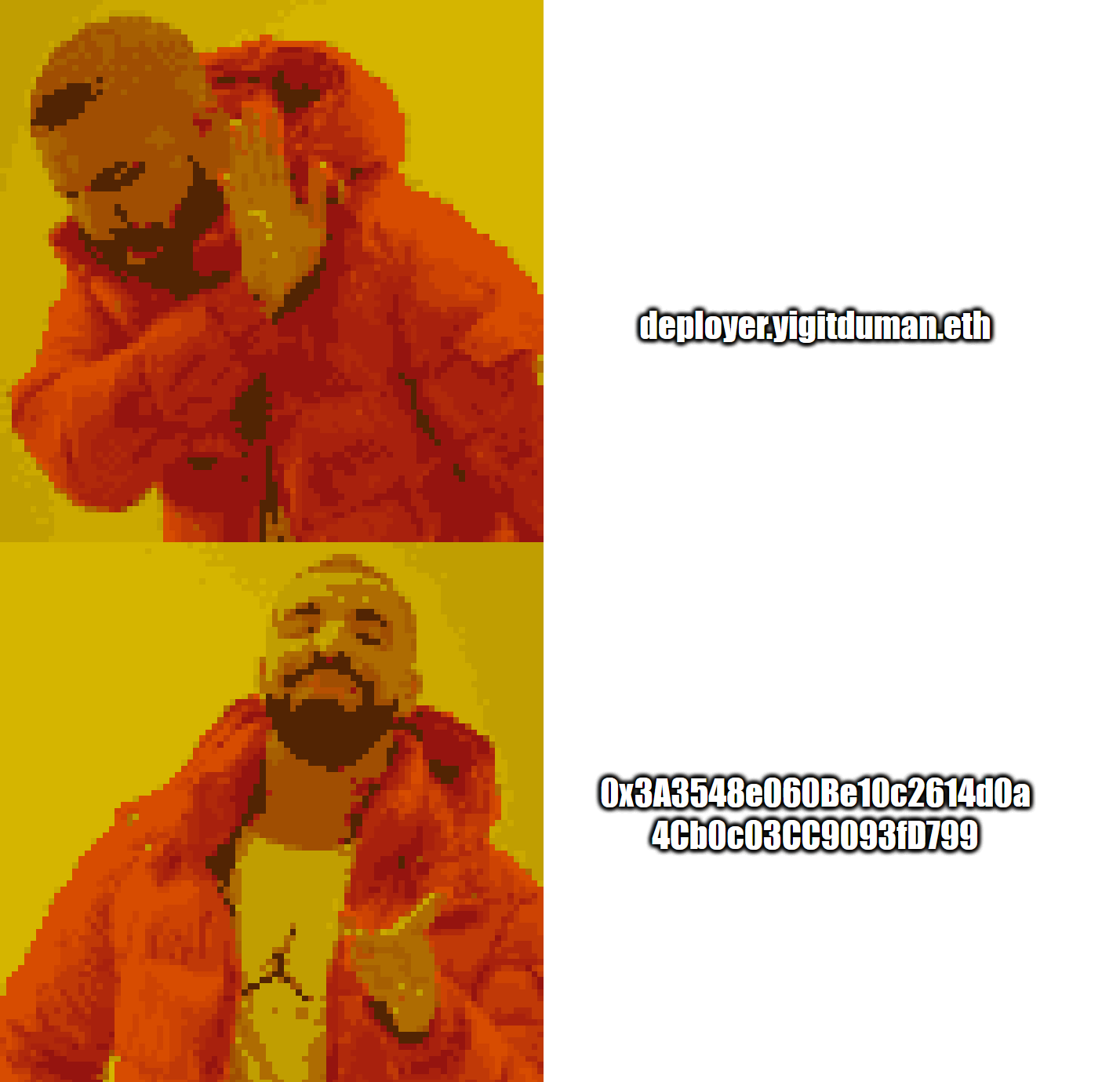
Contrast this with a later project like Yigit Duman’s Drakeflipping (2024), which operates on the blockchain and uses the familiar “Drakeposting” meme—juxtaposing screenshots from Drake’s “Hotline Bling” video where the singer emotes love and disgust—to visualize the transfer of a token from one digital wallet to another. Here the strings of letters and numbers that define ownership are always openly visible, and the image functions as an expressive translation of on-chain data rather than as a disguise for it. Both Kardashian Krypt and Drakeflipping are conceptual jokes that use celebrity images to underscore the internet’s status as a popular medium while pointing to specific operations that govern the use of its networks.
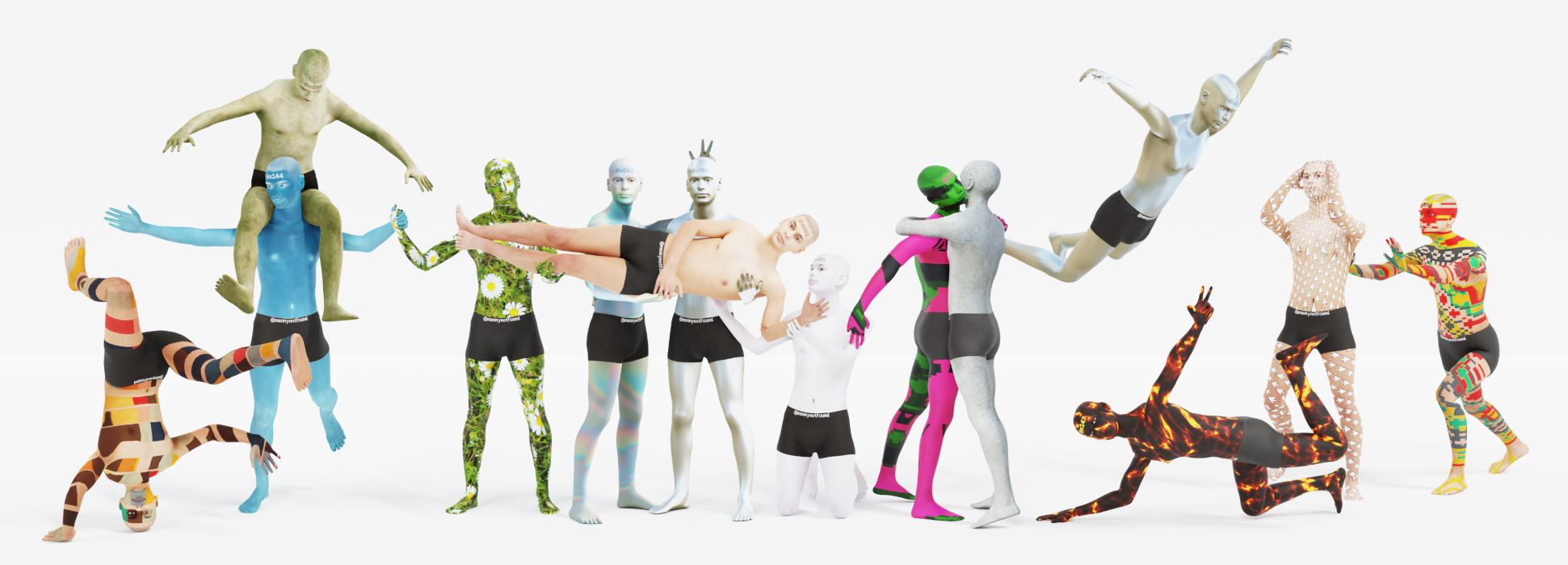
A similar shift can be traced in the practice of Manny Palou, aka Manny404, of the collective Art404. In 2018, Palou released a 3D scan of his body as a freely usable gaming avatar, distributed under permissive terms that he called “Do Whatever You Want But Don’t Be A Fucking Jerk Public License,” allowing anyone to use and profit from his image so long as the use is not hateful. The work’s protocol emphasized open viral spread and the flexible negotiation of identity across platforms. In 2021, Palou reintroduced the avatar as an NFT with customizable tattoos, accessories, and poses, writing lottery mechanics into the NFT’s smart contract—the self-executing agreement stored on the blockchain—so each mint had a random chance of containing rare traits like holographic skin. In the framework of Manny’s Game, collectors collaborated to assemble “master sets” of the rarest versions to unlock a prize pot. If the Web 2.0 version foregrounded open distribution, the web3 iteration specified scarcity and collectability while still fostering community and open-ended play.
Some of the sharpest artists across both periods have made work that deals not only with the protocol as a social contract but also the emotional experiences of participating in it. Lauren Lee McCarthy has built a body of work that performatively embodies the parties in these contracts, giving viewers a visceral sense of the commitments and anxieties that the protocols entail. For Follower (2016), she would spend a day stalking a willing participant to enact the ambient surveillance people accept through smartphone use. As Lauren (2017–), an eponymous home assistant, she installs hardware in participants’ homes so she can answer their questions and turn their lights on and off remotely. Participants often described Lauren’s presence as comforting, revealing a desire for connection that coexists with the creepiness of constant observation.
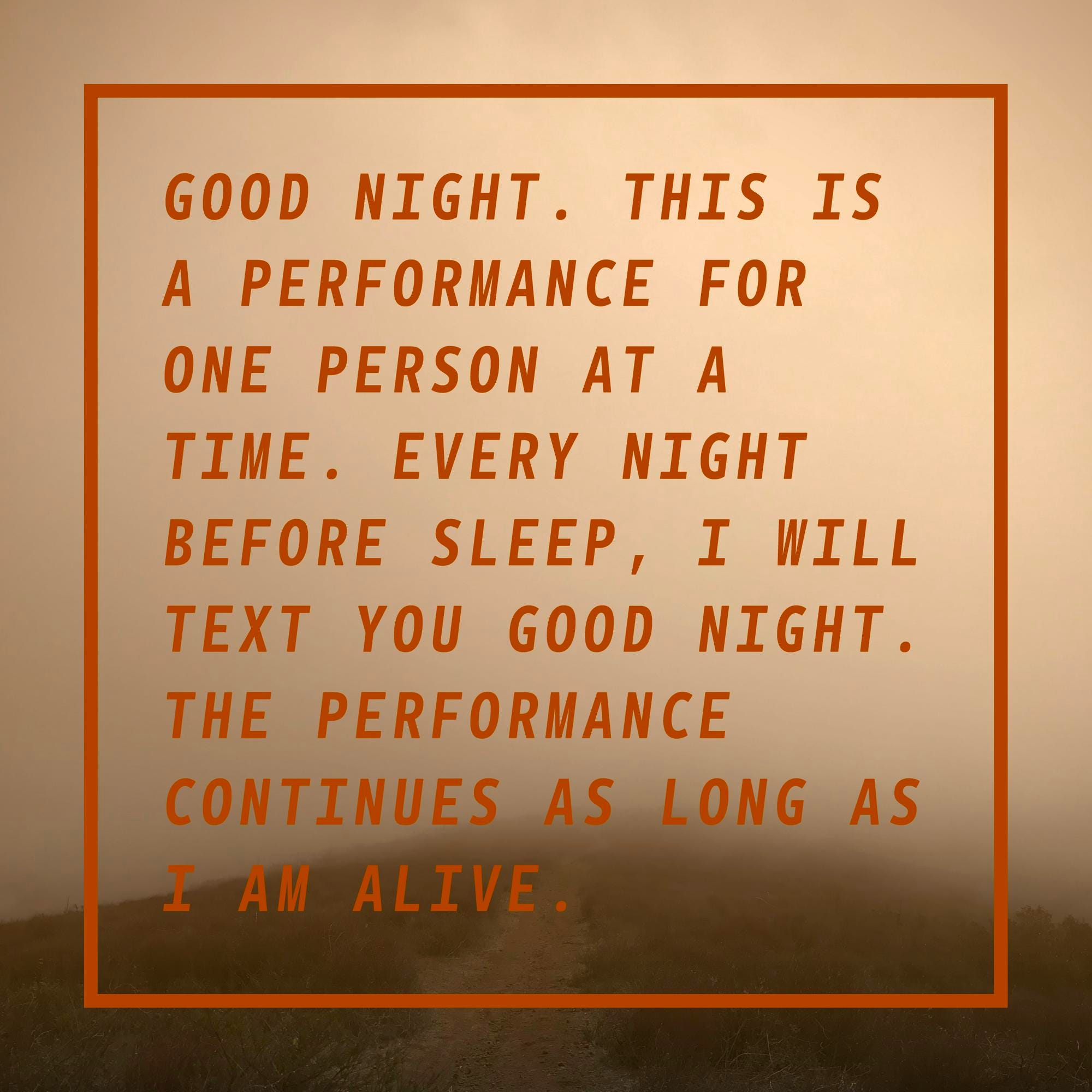
McCarthy’s more recent blockchain-related works extend this inquiry into explicit contractual relations that are still enacted in bodily ways. Under the stipulations of Good Night (2021), she sends nightly text messages sent to the token’s holder. This functions on a social layer of care that exceeds the formal bounds of the smart contract but is nonetheless anchored by it. Rather than critiquing Web 2.0 or celebrating web3, McCarthy’s projects identify the human vulnerabilities that each system exploits and sustains.
Thinking about critical digital art in terms of protocols reveals a continuity between Web 2.0 and web3 eras. The interventionist artists of the 2010s exposed the terms under which users traded data and attention for the ability to participate. Web3 artists, by contrast, literalize those relations in code, producing enforceable agreements between creators and collectors. The aesthetic stakes shift from exposing invisible infrastructures to designing visible ones. Across the examples of Hofmann’s Vine and Loot, the conceptual practice remains consistent: make the system’s workings explicit and allow participants to figure out for themselves what the protocol makes possible. Web3 aesthetics, at their most rigorous, might best be understood as the maturation of a web 2.0 conceptualism that always treated networks as sites of binding agreement. Only now the agreements are no longer hidden in the interface. They are declared, line by line, in the contract itself.
Brian Droitcour is the director of Outland.